


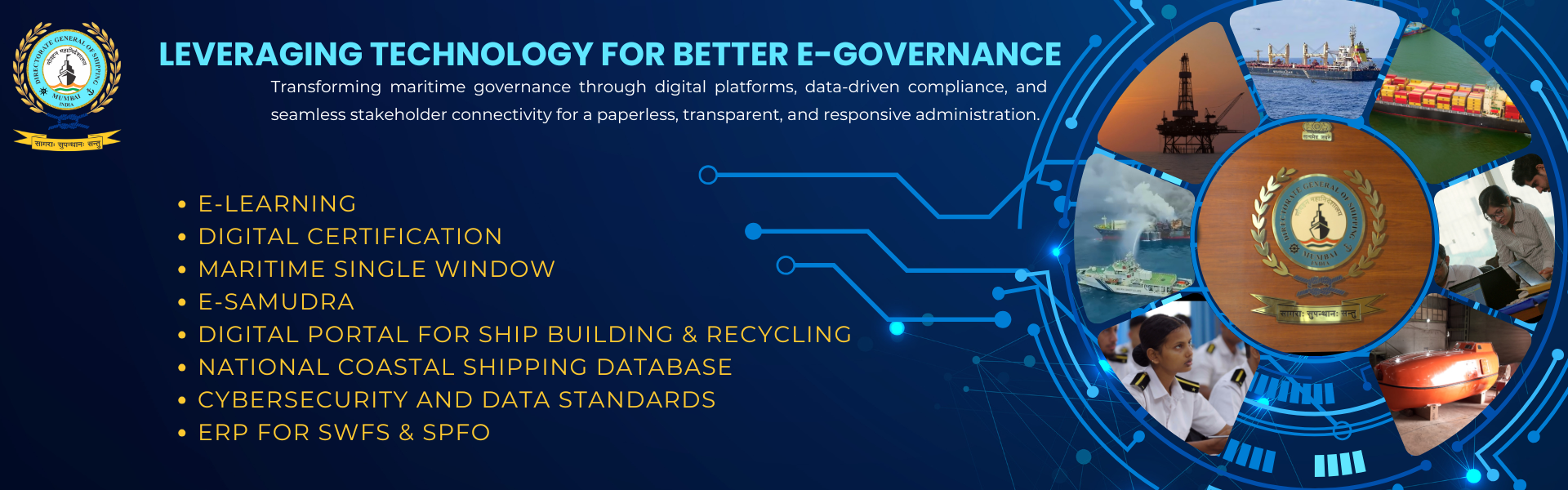



Welcome to Directorate General of Shipping
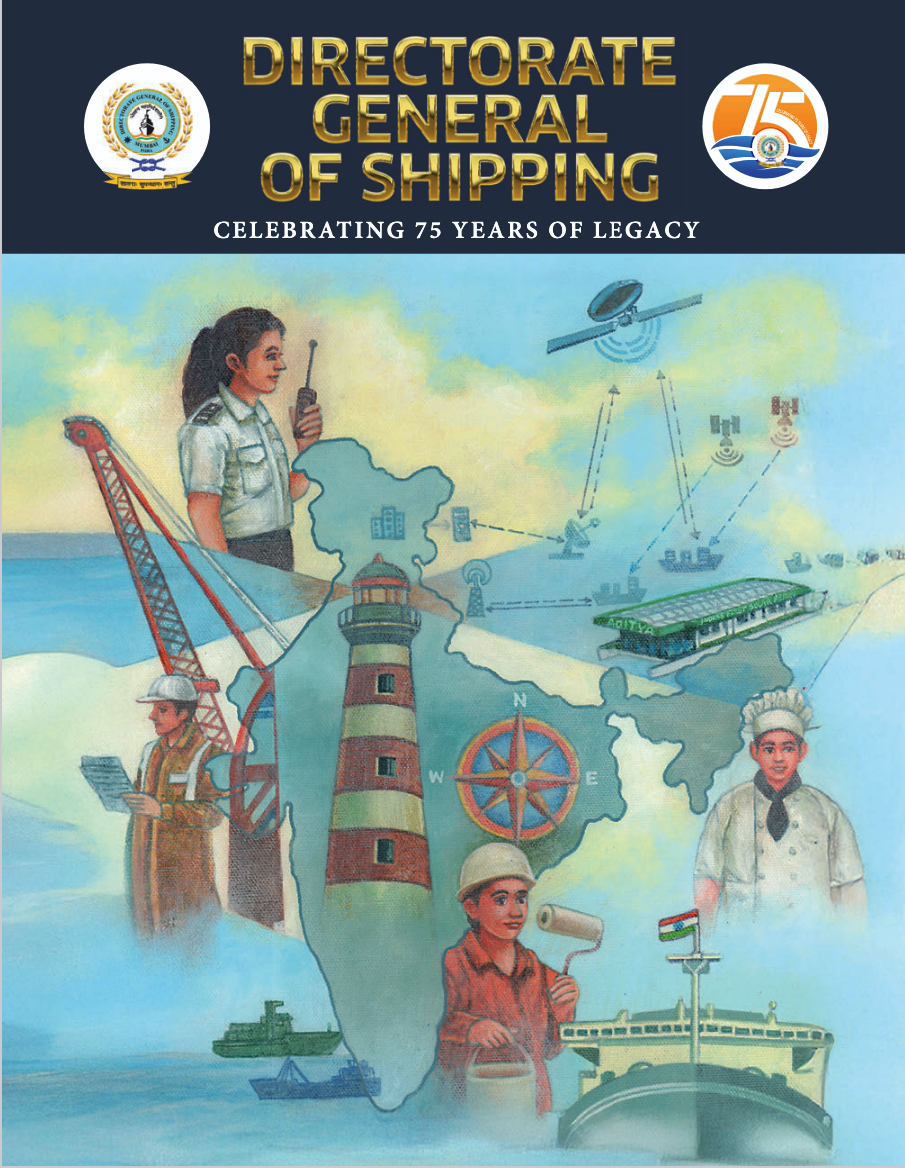
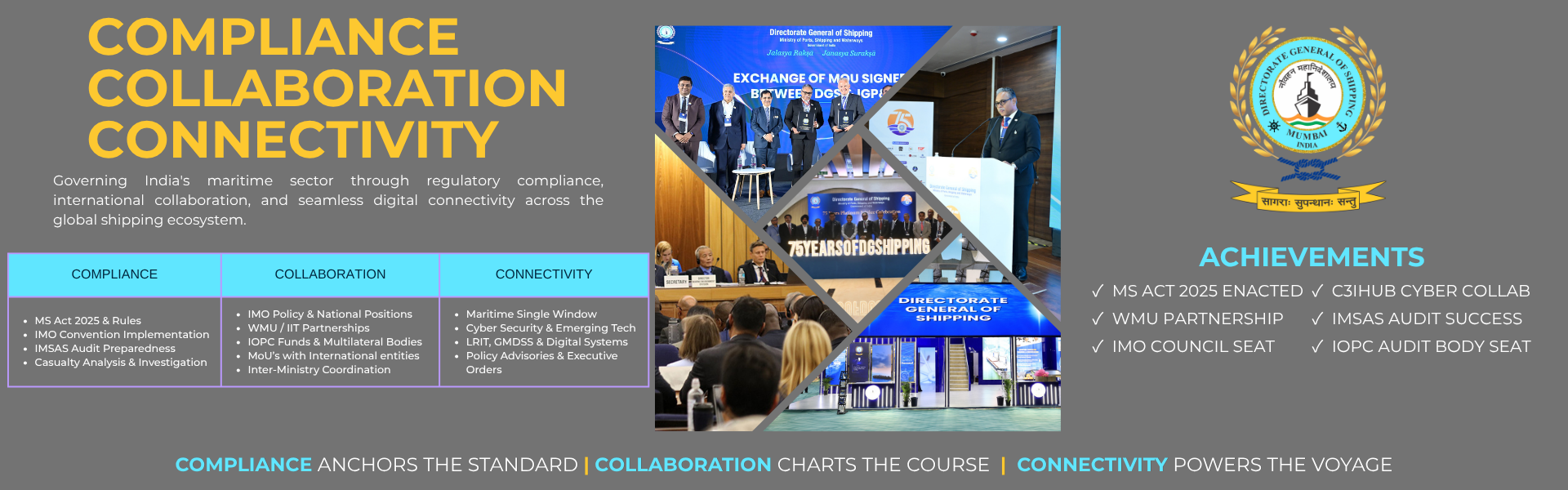
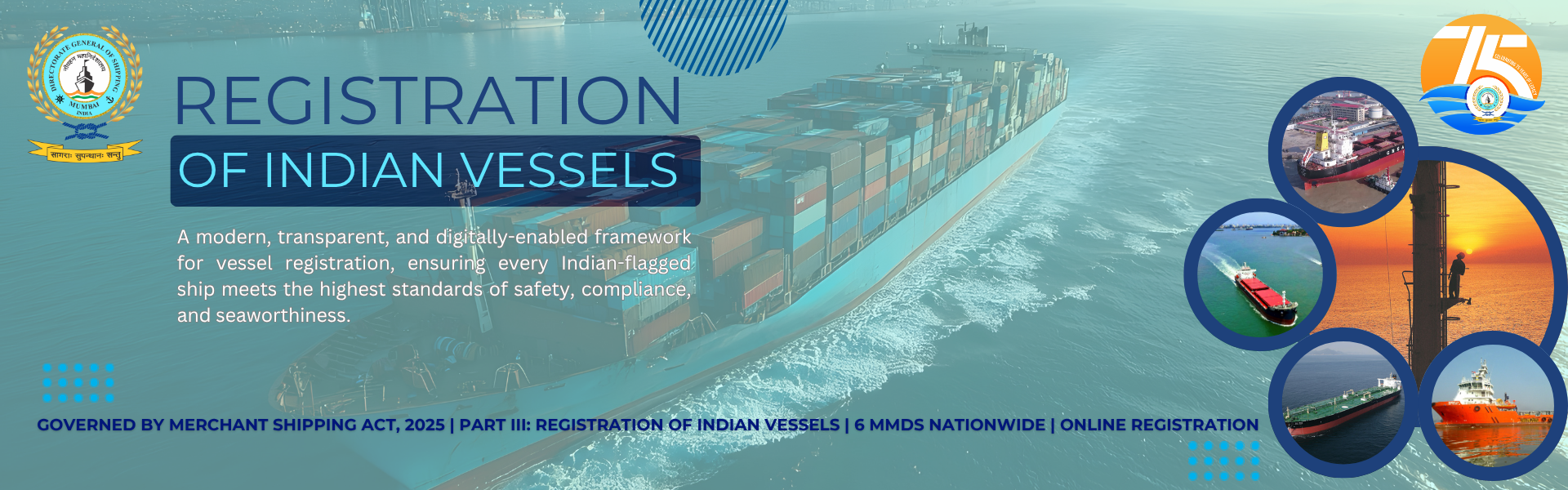
Established in September 1949, the Directorate General of Shipping is the apex maritime authority of the Government of India, functioning as an attached office of the Ministry of Ports, Shipping and Waterways. As India transitions towards a modern and facilitative maritime governance framework under the Merchant Shipping Act, 2025, the Directorate is evolving into the Directorate General of Maritime Administration (DGMA), reflecting its expanded mandate and strategic orientation.
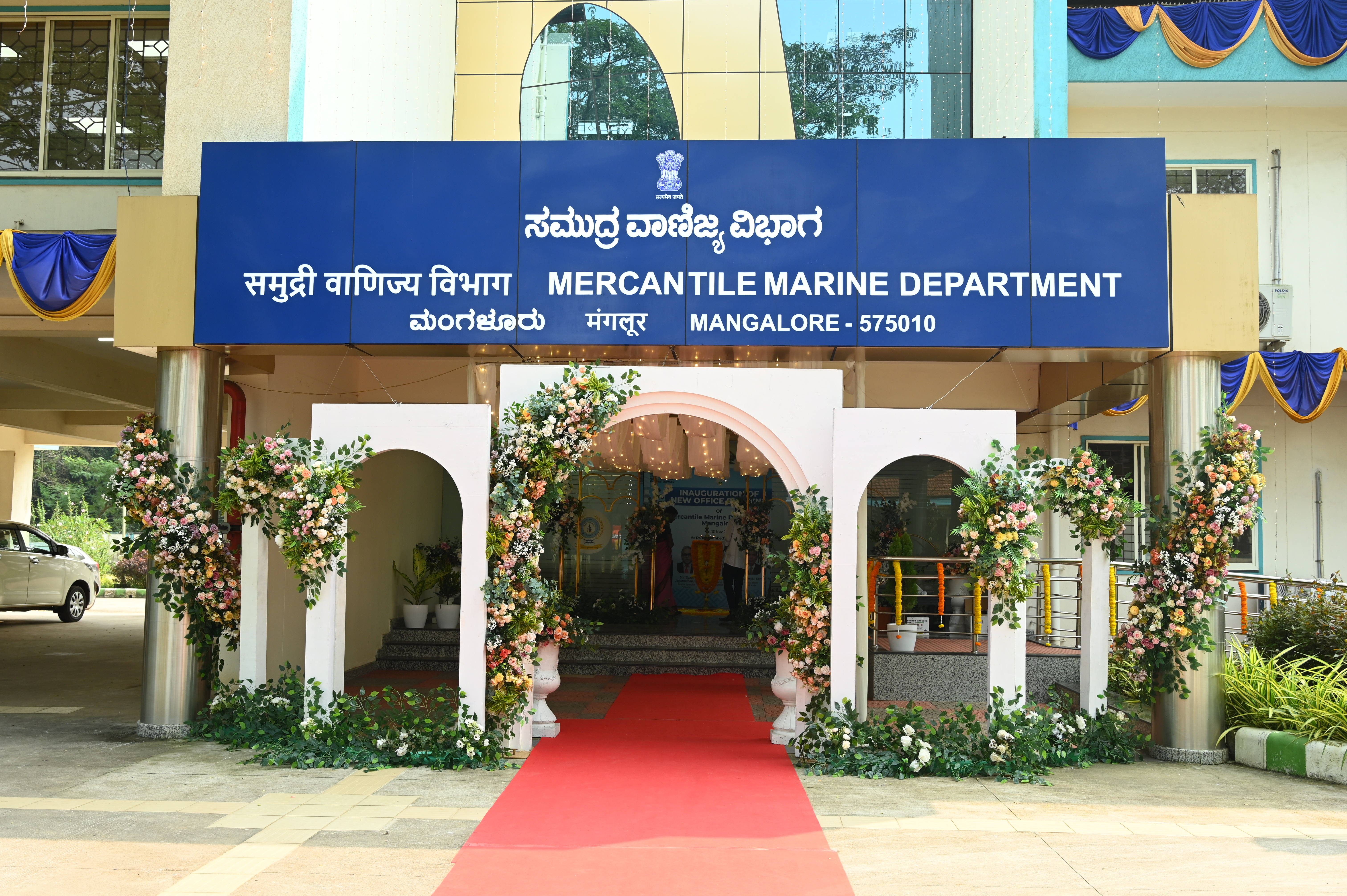
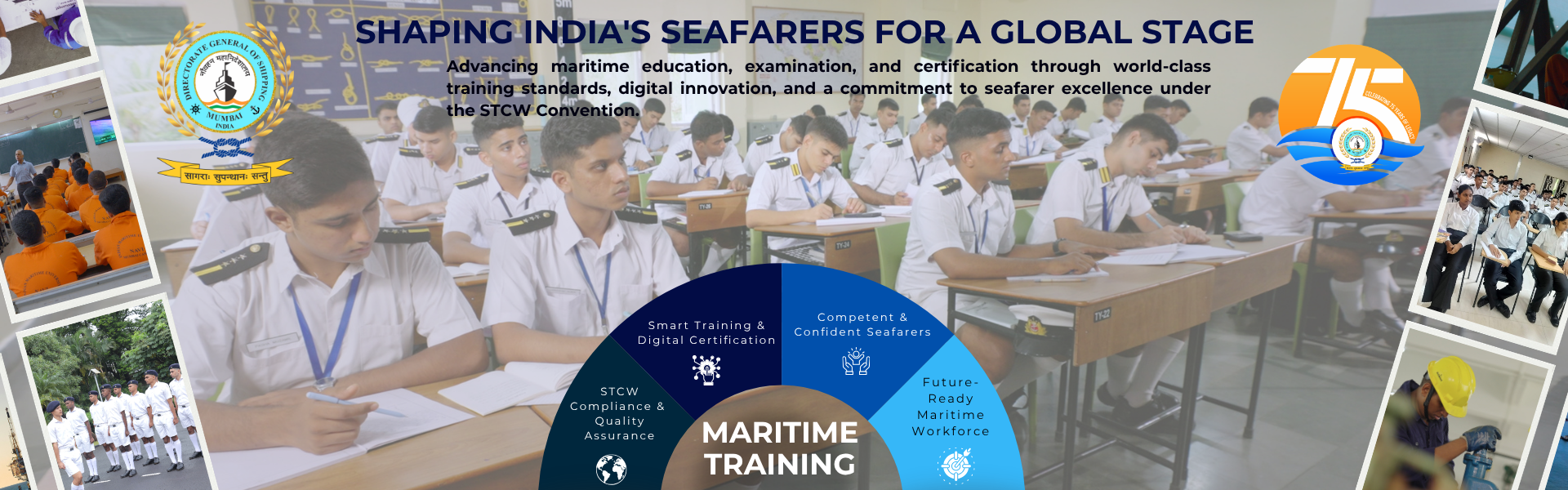
The Directorate is responsible for the implementation of national shipping policy and legislation, encompassing the safety of life and ships at sea, prevention of marine pollution, and the promotion of maritime education and training in coordination with the International Maritime Organization (IMO). Its regulatory purview extends to the registration, survey and certification of vessels, examination and certification of Merchant Navy Officers, regulation of seafarer employment and welfare, development of coastal shipping, augmentation of India's shipping tonnage, and the supervision and control of allied offices, including the Mercantile Marine Departments and the Seamen's Employment Offices, under its administrative jurisdiction.

What's New
-
Onboarding of 24x7 Welfare Counsellor for Seafarers
09-Apr-2026 Size: 1,022.12 KB Format: PDF
-
COC Dispatch List of Nautical as on 09/04/2026
09-Apr-2026 Size: 175.38 KB Format: PDF
-
Booking Notice May 2026
09-Apr-2026 Size: 633.08 KB Format: PDF
-
COC Dispatch List of the Engineering Wing dated 08.04.2026 and 09.04.2026
09-Apr-2026 Size: 67.56 KB Format: PDF
-
Time Table May 2026
09-Apr-2026 Size: 693.56 KB Format: PDF
-
Public Consultation on Notifications/ Orders to be issued under the Merchant Shipping Act,2025.
08-Apr-2026 Size: 1.04 MB Format: PDF
-
COC Dispatch List of Nautical as on 08/04/2026
08-Apr-2026 Size: 339.85 KB Format: PDF
-
Update of New Tonnage Taxation Module on e-Samudra Portal
07-Apr-2026 Size: 887.98 KB Format: PDF
-
Candidates of Nautical Grade 2nd mate (FG), MMD Visakhapatnam are hereby notified that Signal Examination for the Month of May, 2026 has been scheduled on 27-04-2025 at 17:00 Hrs. It is hereby instructed to report at Examination Centre, MMD Visakhapatnam on 27'04-2026 at 16:30 Hrs. Candidates entering beyond reporting time will not be allowed.
07-Apr-2026 Size: 820.12 KB Format: PDF
-
Advertising a Notice on behalf of D. G. Shipping in "Times of India (all Indian edition)" "Navbharat Times" and "Hindustan Times"
07-Apr-2026 Size: 1.63 MB Format: PDF
-
Update of Seafarer Profile on new e-Samudra Portal
07-Apr-2026 Size: 2.69 MB Format: PDF
-
Safety Advisory for Indian Seafarers ashore, in Iranian ports, and onboard vessels at anchorages or operating in or around Iranian waters - reg.
07-Apr-2026 Size: 105.88 KB Format: PDF
-
Draft Circular on Introduction of six-month competency course for Deck Ratings to appear in the Second Mate (Foreign Going) Certificate of Competency Examination. Comments/Suggetions/Feedback may be sent to ravi.sikarwar@gov.in , vikram.manhas@gov.in and nautic.lglassit3-dgs@nic.in by 15-04-2026.
06-Apr-2026 Size: 110.84 KB Format: DOCX
-
Invitation to Interactive Webinar for Nautical Grades Competency Examinations dated 16.04.2026
06-Apr-2026 Size: 408.59 KB Format: PDF
-
Filling up the post of Seamen's Provident Fund Commissioner on deputation (including short term contract) plus promotion in Seamen's Provident Fund Organization, Mumbai
05-Apr-2026 Size: 1.59 MB Format: PDF
-
Requirements for the carriage of plastic pellets by sea in freight containers
03-Apr-2026 Size: 831.93 KB Format: PDF
-
COC Dispatch List of Nautical as on 02/04/2026 (Published Date : 02/04/2026)
02-Apr-2026 Size: 342.69 KB Format: PDF
-
COC Dispatch List of Nautical as on 02/04/2026 (Published Date : 02/04/2026)
02-Apr-2026 Size: 352.29 KB Format: PDF
-
Request for Proposals (RFP) for Selection of Service Provider for the Development of a Maritime Training Ecosystem
02-Apr-2026 Size: 2.18 MB Format: PDF
-
Mandatory Comprehensive Inspection Programme (CIP) for all DGS approved Maritime Training Institutes
01-Apr-2026 Size: 1.40 MB Format: PDF
-
Extension of validity of Certificates of Competency (CoC), Certificates of Proficiency (CoP) and other STCW certificates due to the prevailing security situation in the Middle East / West Asia region – reg.
29-Mar-2026 Size: 1.04 MB Format: PDF
-
Preparatory Course for Oral Examination leading to Nautical Grade Certificate of Competency under the STCW Convention-reg.
21-Feb-2026 Size: 4.96 MB Format: PDF
Latest News
The Latest News section serves as an official platform for sharing recent updates, circulars, advisories, policy decisions, and important announcements issued by the maritime administration. It provides timely information to seafarers, shipping companies, maritime institutes, and other stakeholders on regulatory changes, compliance requirements, safety measures, and administrative developments.
-
The Registration of Multimodal Transport Operators Rules, 1992 & MTD Rules, 1994
18-Feb-2026 Size: 49.26 KB Format: PDF
-
Ship Recycling Rules 2021
10-Feb-2026 Size: 1.02 MB Format: PDF
-
Ship Recycling Regulations
06-Feb-2026 Size: 2.24 MB Format: PDF
-
Particulars of recipients of concessions, permits of authorizations granted by the public authority
04-Feb-2026 Size: 321.11 KB Format: PDF
-
CAG & PAC paras
04-Feb-2026 Size: 413.47 KB Format: PDF
-
Are the details of policies / decisions, which affect public, informed to them : [Section 4(1) (c)].
04-Feb-2026 Size: 140.90 KB Format: PDF
-
Dissemination of information widely and in such form and manner which is easily accessible to the public.
04-Feb-2026 Size: 136.25 KB Format: PDF
-
Form of accessibility of information manual/ handbook.
04-Feb-2026 Size: 346.89 KB Format: PDF
-
Whether information manual/ handbook available free of cost or not
04-Feb-2026 Size: 119.06 KB Format: PDF
-
Language in which Information Manual/Handbook Available.
04-Feb-2026 Size: 100.26 KB Format: PDF
-
When was the information Manual/Handbook last updated?
04-Feb-2026 Size: 106.00 KB Format: PDF
-
Information available in electronic form
04-Feb-2026 Size: 181.06 KB Format: PDF
-
Particulars of facilities available to citizen for obtaining information.
04-Feb-2026 Size: 149.97 KB Format: PDF
-
Such other information as may be prescribed under section.
04-Feb-2026 Size: 232.39 KB Format: PDF
-
Receipt & Disposal of RTI applications & appeals
04-Feb-2026 Size: 230.87 KB Format: PDF
-
Replies to questions asked in the parliament :
04-Feb-2026 Size: 15.30 MB Format: PDF
-
Item / information disclosed so that public have minimum resort to use of RTI Act to obtain information.
04-Feb-2026 Size: 169.38 KB Format: PDF
-
Guidelines for Indian Government Websites (GIGW) is followed (released in February, 2009 and included in the Central Secretariat Manual of Office Procedures (CSMOP) by Department of Administrative Reforms and Public Grievances, Ministry of Personnel, Public Grievance and Pensions, Govt. Of India).
04-Feb-2026 Size: 10.00 MB Format: PDF
-
Power and duties of its officers and employees.
03-Feb-2026 Size: 462.73 KB Format: PDF
-
Procedure followed in decision making process.
03-Feb-2026 Size: 305.81 KB Format: PDF
Acts & Rules Highlights
Acts and Rules form the legal framework within which government bodies and institutions operate. An Act is a law passed by the Parliament or State Legislature that provides the legal authority and foundation for governance in a specific area. Once an Act is enacted, the concerned department or ministry may frame detailed Rules and Regulations under it to define procedures, responsibilities, and operational guidelines. While Acts lay down the broad principles or provisions, Rules serve as the practical tools to implement those provisions effectively.
-
Collision / Contact damage between MANTA NIGAR and JAG RADHA at P & V anchorage, Mumbai on 02.08.202
07-Oct-2026 Size: 989.95 KB Format: PDF
-
Mandatory Comprehensive Inspection Programme (CIP) for all DGS approved Maritime Training Institutes
01-Apr-2026 Size: 1.40 MB Format: PDF
-
Usage of Satellite Communication Equipment in Indian Coastal Waters by Ships and Seafarers
11-Mar-2026 Size: 1.26 MB Format: PDF
-
Office Order No 23 of 2026
10-Feb-2026 Size: 341.43 KB Format: PDF
-
Office Order no 22 of 2026
10-Feb-2026 Size: 439.79 KB Format: PDF
-
Usage of Satellite Communication Equipment in Indian Waters by Ships and Seafarers – Reg
10-Feb-2026 Size: 28.13 KB Format: DOCX
-
Revocation General Orders Nos. 1 of 2018, 2 of 2018, and 3 2018
21-Jan-2026 Size: 823.87 KB Format: PDF
-
Age Norms and other Qualitative Parameters for Registration/operation of vessels under Indian flag and, the foreign flag vessels required to apply for a license under Sec 406 & 407 of The Merchant Shipping Act 1958.
21-Jan-2026 Size: 9.50 MB Format: PDF
-
Sagar Offshore - Order_0001
14-Jan-2026 Size: 801.50 KB Format: PDF
-
Re-Delegation of Financial Powers in the DG Shipping
23-Dec-2025 Size: 1.47 MB Format: PDF
-
Able Angel - Withdrawal Order_0001
23-Dec-2025 Size: 905.97 KB Format: PDF
-
Amethyst - Withdrawal Order_0001
23-Dec-2025 Size: 1.77 MB Format: PDF
-
Re-Deleeation of Financial Porvers in the DG Shipnine - res.
19-Dec-2025 Size: 1.41 MB Format: PDF
-
Procurement Compliance Order
12-Dec-2025 Size: 20.69 MB Format: PDF
-
Order-01.12.2025 to MTI Nandhanam College
01-Dec-2025 Size: 2.33 MB Format: PDF
-
Implementation of Electronic Bank Guarantee (e-BG) System for all Tenders and Contracts under Directorate General of Shipping, Mumbai
24-Nov-2025 Size: 3.46 MB Format: PDF
-
Promotion of Capt. Pardhasaradhi Vanamali as Deputy Nautical Adviser-cum-Senior Deputy Director General (Technical), Directorate General of Shipping
31-Oct-2025 Size: 364.91 KB Format: PDF
-
Promotion of Capt. Santoshkumar Sahebrao Darokar as Principal Officer (Nautical)-cum-Joint Director General (Technical), Directorate General of Shipping
28-Oct-2025 Size: 376.00 KB Format: PDF
-
IIM Indore Study Report on Age Norms
23-Sep-2025 Size: 2.76 MB Format: PDF
-
IIM Indore Study Report on Age Norms
23-Sep-2025 Size: 1.48 MB Format: PDF
DGS Orders Highlights
Orders are formal instructions or decisions issued by government authorities, regulatory bodies, or competent officials to enforce policies, implement provisions of law, or direct specific actions. Unlike circulars, which mainly clarify or guide, orders are binding and often pertain to enforcement, administrative changes, appointments, or specific actions that must be carried out. They derive their authority from relevant Acts or Rules and are essential for translating legal provisions into actionable steps.
-
Safety Advisory for Indian Seafarers ashore, in Iranian ports, and onboard vessels at anchorages or operating in or around Iranian waters - reg.
07-Apr-2026 Size: 105.88 KB Format: PDF
-
Requirements for the carriage of plastic pellets by sea in freight containers
03-Apr-2026 Size: 831.93 KB Format: PDF
-
Extension of validity of Certificates of Competency (CoC), Certificates of Proficiency (CoP) and other STCW certificates due to the prevailing security situation in the Middle East / West Asia region – reg.
29-Mar-2026 Size: 1.04 MB Format: PDF
-
Resolutions, Amendments to Resolutions, Guidelines, Interim Guidelines and Unified Interpretations Adopted/Approved by the 59th Session of the Marine Environment Protection Committee (MEPC 59) of IMO and Circulars.
27-Mar-2026 Size: 224.08 KB Format: PDF
-
Issues faced in export shipments through sea routes in view of the evolving situation in the Middle East-reg
13-Mar-2026 Size: 422.68 KB Format: PDF
-
Advisory to Shipping Lines/Carriers/Agents regarding transparency in transaction costs and avoidance of predatory, non-transparent, and opportunistic pricing in EXIM trade.
09-Mar-2026 Size: 576.09 KB Format: PDF
-
Implementation of Amendments to the STCW Convention, 1978, as amended, related to Ships Operating in Polar Waters (Regulation V/4) (MSC.416(97) & MSC.417(97))
09-Mar-2026 Size: 521.61 KB Format: PDF
-
Implementation of the 2016 amendments to the STCW Convention and Code relating to Regulation V/2 – Training and Certification requirements for personnel on passenger ships - reg.
09-Mar-2026 Size: 373.49 KB Format: PDF
-
Advisory to Indian Flag Vessels and Indian Seafarers regarding escalation of Security Situation in Iran, Strait of Hormuz, Persian Gulf and Adjacent Waters – reg.
28-Feb-2026 Size: 879.81 KB Format: PDF
-
Preparatory Course for Oral Examination leading to Nautical Grade Certificate of Competency under the STCW Convention-reg.
21-Feb-2026 Size: 4.96 MB Format: PDF
-
Implementation of Sagar mein samman (SMS) – Five-year action plan (2025–2030) for promotion of gender equality and inclusion in the maritime sector.
09-Feb-2026 Size: 726.99 KB Format: PDF
-
Medical Examiner of Seafarers (Doctors) Regular List as on 06.02.2026
06-Feb-2026 Size: 1.74 MB Format: PDF
-
DGS Circular 04 of 2026 regarding revision of checklist and user manual
04-Feb-2026 Size: 491.85 KB Format: PDF
-
User Manual_Document_MTO_V3.1
04-Feb-2026 Size: 8.33 MB Format: PDF
-
Regarding the revision of the checklist for registration certificates/renewal of registration and changes in name/address.
04-Feb-2026 Size: 661.40 KB Format: PDF
-
Mandatory Training Requirements for Security Personnel engaged by the Port Facilities
02-Feb-2026 Size: 612.50 KB Format: PDF
-
Circular reg. Closed office on 15.01.2026
14-Jan-2026 Size: 343.59 KB Format: PDF
-
PROMULGATION OF SAFETY VIDEO SERIES BY DG SHIPPING - HIGHLY RECOMMENDED FOR ALL THE SEAFARERS AND TRAINEES
22-Dec-2025 Size: 379.01 KB Format: PDF
-
Addendum to Training Circular No 6 of 2025 on Swimming Pool
15-Dec-2025 Size: 388.20 KB Format: PDF
-
Advisory and instructions on Safe Voyage Planning for General Cargo ships Operating between Mainland and A&N islands and within the A&N islands in Monsoon and Rough Weather Conditions – reg.
15-Dec-2025 Size: 12.35 MB Format: PDF
DGS Circulars Highlights
Circulars are official communications or directives issued by government departments, regulatory bodies, or organizations to provide instructions, clarifications, or policy-related updates. They are not laws but serve to explain, interpret, or guide the implementation of existing Acts, Rules, or procedures. Circulars help ensure that all concerned parties—such as field offices, institutions, or stakeholders—have a consistent understanding of the applicable regulations and operational guidelines.
-
Merchant Shipping Notice No. 02 of 2026 : Implementation of SOLAS Regulation II-1/3-13 – Lifting Appliances and Anchor Handling Winches on Board Indian-Flag Vessels
22-Jan-2026 Size: 478.98 KB Format: PDF
-
Criteria for Empanelment and Retention of Salvors
15-Jan-2026 Size: 5.91 MB Format: PDF
-
MS notice No.08 of 2025 - Guidelines for approval of LSA Service Stations for servicing of Inflatable Life Saving Appliances i.e. Inflatable Life Raft. Inflatable Rescue Boat, Inflatable Life Jacket and Immersion Suits and Procedure for approval of Competent Persons for servicing of such LSA
09-Dec-2025 Size: 3.16 MB Format: PDF
-
Merchant Shipping Notice No. 11 of 2025 mandates Indian ports to deploy sea-going tugs with emergency towing and fire-fighting capabilities for rapid maritime response.
10-Oct-2025 Size: 1.07 MB Format: PDF
-
Addendum-II to MS Notice No. 08 of 2023 and MS Notice No. 10 of 2024 – Amendments to the Procedure for Approval, Empanelment, Renewal, and Tenure of Medical Examiners of Seafarers under Rule 4 of the MS Medical Examination Rules.
22-Sep-2025 Size: 619.33 KB Format: PDF
-
India's Largest Consulting focused on the concept of 'Idea Realisation'
25-Jul-2025 Size: 6.25 MB Format: PDF
-
Compliance Advisory to all Marine Laboratories engaged in testing of Solid Bulk Cargoes under IMSBC Code- reg
16-Jul-2025 Size: 1.26 MB Format: PDF
-
Compliance Advisory to All Marine Laboratories engaged in testing of solid bulk cargoes under IMSBC Code
16-Jul-2025 Size: 1.26 MB Format: PDF
-
Celebration of International Yoga Day on 21/06/2025
19-Jun-2025 Size: 599.93 KB Format: PDF
-
IMO Brochure(Reserch & Publications)
16-Jun-2025 Size: 4.85 MB Format: PDF
-
Programme of ILO official meetings for the remainder of 2025 and advance information on meetings for 2026
16-Jun-2025 Size: 83.20 KB Format: PDF
-
International Maritime Annual Event Calendar 2025
16-Jun-2025 Size: 717.67 KB Format: PDF
-
India Maritime Week 2025
01-Jun-2025 Size: 324.22 KB Format: PDF
-
Mandatory Verification of Protection and Indemnity (P&I) Certificate by Indian Port Authorities
07-May-2025 Size: 472.95 KB Format: PDF
-
Issuance of Guidance Note on IMO’s Net-Zero Framework and GFI-Based Measure– Appeal for Proactive Preparedness by Maritime Stakeholders
30-Apr-2025 Size: 1.23 MB Format: PDF
-
Recommended Standards for Shore to Ship Power Supply (SPS) atIndian Ports and Ships
17-Mar-2025 Size: 434.63 KB Format: PDF
-
Addendum to M.S. Notice No. 16 of 2016 dated 08.12.2016: Implementation of Maritime Labour Convention,2006- inspection and certification of the Maritime Labour Conditions of Indian Flagged ships
04-Mar-2025 Size: 8.04 MB Format: PDF
-
Installation of Closed-Circuit Television (CCTV) Systems on Indian-Flagged Vessels and Foreign Flag Vessels visiting Indian Ports
12-Feb-2025 Size: 392.80 KB Format: PDF
-
Age Restriction for Engagement of Seafarers for service on ships
06-Feb-2025 Size: 793.87 KB Format: PDF
-
National Contact point (Regional Contact Points ) for Safety and Pollution prevention and response
31-Jan-2025 Size: 651.14 KB Format: PDF
MS Notices Highlights
Notices are official announcements or written communications issued by government departments, authorities, or institutions to convey information, instructions, or warnings to individuals, organizations, or the general public. They serve as a formal method of communication for matters such as deadlines, meetings, legal actions, public disclosures, or changes in procedures. Notices ensure transparency and provide affected parties with adequate time or information to respond or comply.
-
Request for Proposals (RFP) for Selection of Service Provider for the Development of a Maritime Training Ecosystem
02-Apr-2026 Size: 2.18 MB Format: PDF
-
Request for Expression of Interest (REOI) for Consultancy Services for Ship Recycling DPR Preparation and Digital Enablement Planning.
24-Dec-2025 Size: 1.29 MB Format: PDF
-
Tender details regarding request for Proposal for the selection consultancy firm for development of Safety Training and competency standards for Offshore Industry
10-Nov-2025 Size: 1.12 MB Format: PDF
-
Tender details for selection of consultancy firm for preparation on Indian Maritime Compliance Manual for DGS
10-Nov-2025 Size: 1.07 MB Format: PDF
-
Request for Proposals for Selection of GIS Consultants/Experts for Developing Framework and Guidelines for Geospatial Data Standards for Geospatial Platform for Indian Ports
10-Nov-2025 Size: 1.52 MB Format: PDF
-
NALSAR University of Law, Hyderabad invites applications for four posts of Legal Consultant (Maritime Law) in collaboration with the Directorate General of Shipping, Mumbai. Last date: October 31, 2025
23-Oct-2025 Size: 206.56 KB Format: PDF
-
LPC Document -- For Hiring of CNG-Powered Hatchback Vehicle with Driver on Lease
28-Sep-2025 Size: 882.62 KB Format: PDF
-
Bid documents (RFP and BoQ) for Selection of vendor for establish the Indian Global Maritime Safety Platform for DGS
12-Jul-2025 Size: 2.84 MB Format: PDF
-
Request for Proposal for Selection of System Integrator for Complete ERP development of Seamens Provident Fund Organization (SPFO), the Ministry of Ports, Shipping and Waterways (MoPSW), Govt. of India
05-Jun-2025 Size: 2.71 MB Format: PDF
-
Selection of System Integrator for Complete ERP development of Seafarer Welfare Fund Society, Autonomous Society, administratively controlled by the Ministry of Ports, Shipping and Waterways, Govt. of India
05-Jun-2025 Size: 3.11 MB Format: PDF
-
Request for Expression of Interest (REOI) for Strategic Support Unit for the “Shipbuilding Cell" at the Directorate General of Shipping for Investment Promotion
22-May-2025 Size: 2.08 MB Format: PDF
-
EOI and bid summary for Selection of GIS Consultants/Experts for Developing Framework and Guidelines for Geospatial Data Standards for Geospatial Platform
20-May-2025 Size: 1.40 MB Format: PDF
-
Tender for Disposal for E-Waste - Obsolete Computer Hardware and Peripherals
16-May-2025 Size: 3.70 MB Format: PDF
-
Request for Proposals (RFP) for Selection of Management Support Unit (MSU) for Seafarer's Welfare Fund Society
10-May-2025 Size: 1.25 MB Format: PDF
-
Request for Proposals (RFP) for Selection of System Integrator for Complete ERP development of Seamen’s Provident Fund Organization (SPFO) Seafarer’s Welfare Fund Society (SWFS), under the Ministry of Ports, Shipping and Waterways (MoPSW), Govt. of India
10-May-2025 Size: 2.28 MB Format: PDF
-
Selection of Service Provider for Formalizing the Digital Record Room for the Directorate General of Shipping, Government of India
02-May-2025 Size: 1.53 MB Format: PDF
-
BID Documents for Mementos published in ePublishing System, GOI.
01-May-2025 Size: 404.53 KB Format: PDF
-
BID for Housekeeping Staff published in GeM Portal.
01-May-2025 Size: 99.91 KB Format: PDF
-
Request for Expression of Interest (REOI) for Selection of vendor to establish the Indian Global Maritime Safety Platform (IGMSP) for Directorate General of Shipping
29-Apr-2025 Size: 251.13 KB Format: PDF
-
Date Extention summary Selection of consultancy firm to the DGS for conducting feasibility study for setting up of an Indian Protection Insurance
29-Apr-2025 Size: 253.86 KB Format: PDF
Tenders Highlights
Tenders are formal invitations issued by government departments, public sector undertakings, or private organizations to invite bids from vendors, contractors, or service providers for the supply of goods, execution of works, or provision of services. The tendering process is designed to ensure transparency, competitiveness, and fairness in public procurement. It typically involves publishing a tender notice, accepting bids, evaluating proposals based on technical and financial criteria, and awarding the contract to the most suitable bidder.
Modules










Wings / Branches
-
 Mercantile Marine Law
 -
 Vigilance
 -
 Training Branch
 -
 Shipping Development
 -
 RTI
RTI -
 Personnel Branch
 -
 NMDC
NMDC -
 Naval Architecture
 -
 Nautical Wing
 -
 Multimodal Transport Operator
 -
 Administration
 -
 International Cooperation
 -
 Hindi Branch
 -
 Finance, Accounts, Audit & Public Procurement
 -
 Engineering
 -
 IT & E-Governance
 -
 DGS Secretariat
 -
 Crew
Crew -
 Coastal Shipping
 -
 Co-ordination
Mercantile Marine Departments





Allied Offices & Autonomous Bodies

Government Shipping Office, Chennai
Read More

Government Shipping Office, Kolkata
Read More

Government Shipping Office, Mumbai
Read More
Regional Office (Sails) Mumbai
Read More

Regional Office (Sails), Jamnagar
Read More

Regional Office (Sails), Tuticorin
Read More
Seamen Employment Office, Mumbai
Read More
Seamen Employment Office, Kolkata
Read More
Seamen Employment Office, Chennai
Read More
Events Calendar
Event Details
Title: Click on an event to see details
Start:
End:
Description:
Event Link:

Current News
- NCV CL-III SEO ORAL FEBRUARY 2026 MMD KOLKATA (10-Apr-2026 Size: 409.53 KB, Format: pdf)
- NCV CL-IV WRITTEN FEBRUARY 2026 MMD KOLKATA (10-Apr-2026 Size: 494.44 KB, Format: pdf)
- NCV CL-III SEO PART A WRITTEN FEBRUARY 2026 MMD MUMBAI (10-Apr-2026 Size: 272.68 KB, Format: pdf)
- NCV CL-IV ORAL FEBRUARY 2026 MMD KOLKATA (10-Apr-2026 Size: 417.01 KB, Format: pdf)
- NCV CL-III SEO PART A WRITTEN FEBRUARY 2026 MMD KOLKATA (10-Apr-2026 Size: 518.98 KB, Format: pdf)
- RESULT OF NCV CL-IV WRITTEN FEBRUARY 2026 MMD KOCHI (06-Apr-2026 Size: 195.74 KB, Format: pdf)
- RESULT OF NCV CL-IV ORAL FEBRUARY 2026 MMD KOCHI (06-Apr-2026 Size: 249.44 KB, Format: pdf)
- Notice to Engineering candidates intending to appear MEO Class IV grade CoC examinations at all MMD examination centres. (10-Apr-2026 Size: 681.50 KB, Format: pdf)
- Signal Examination Notice (Examination Centre, MMD Chennai) for the month of MAY - 2026 (10-Apr-2026 Size: 630.28 KB, Format: pdf)
- Time Table May 2026 (09-Apr-2026 Size: 693.56 KB, Format: pdf)
- Booking Notice May 2026 (09-Apr-2026 Size: 633.08 KB, Format: pdf)
- Candidates of Nautical Grade 2nd mate (FG), MMD Visakhapatnam are hereby notified that Signal Examination for the Month of May, 2026 has been scheduled on 27-04-2025 at 17:00 Hrs. It is hereby instructed to report at Examination Centre, MMD Visakhapatnam on 27'04-2026 at 16:30 Hrs. Candidates entering beyond reporting time will not be allowed. (07-Apr-2026 Size: 820.12 KB, Format: pdf)
- Notice All Grade - Engineering Examinations Including Extra First-Class Examinations (MMD Mumbai) (30-Mar-2026 Size: 204.67 KB, Format: pdf)
- Signal Examination Notice (Examination Centre, MMD Noida) for the month of April, 2026 (18-Mar-2026 Size: 79.46 KB, Format: pdf)
- Onboarding of 24x7 Welfare Counsellor for Seafarers (09-Apr-2026 Size: 1,022.12 KB, Format: pdf)
- Advertisement in respect of vacancy for the post of Group ‘A’ Administrative cum Accounts Officer (15-Jun-2025 Size: 468.97 KB, Format: pdf)
- Vacancy Circular - Appointment of Administrative cum Accounts Officer (A.A.O.) on deputation basis in SPFO (05-Jun-2025 Size: 1.73 MB, Format: pdf)
- Term of Reference (TOR) for Engagement of Project Management Resource (Project Engineer) for SWFS Projects (15-May-2025 Size: 2.38 MB, Format: pdf)
- Vacancy Circular - Release of advertisement in the Employment News/Rojgar Samachar for filling up the post of Seamen's Provident Fund Commissioner on deputation (including short terms contract) plus promotion in Seamen's Provident Fund Organization, Mumbai. (13-May-2025 Size: 1.45 MB, Format: pdf)
- Vacancy Circular - Advertisement for Senior office Assistant Cum Accountant for Nabik Griha Samity, Kolkata (01-May-2025 Size: 2.38 MB, Format: pdf)
Social Media