
Singapore Maritime Week (SMW) 2026
1. Executive Summary
Singapore Maritime Week (SMW) 2026, held from April 20–24, 2026, served as a premier global platform for maritime policy, innovation, and collaboration. Marking its 20th edition, the event attracted over 20,000 participants and 200 exhibitors from more than 80 countries. Against a backdrop of rapid structural transformation defined by decarbonization, digitalization, and supply chain resilience India transitioned from a fragmented presence to a coordinated national strategy.
Singapore Maritime Week (SMW) 2026
28-02-2025
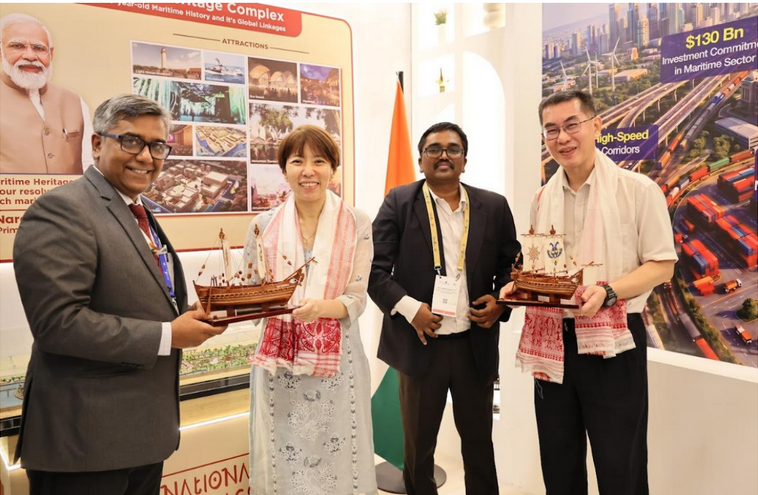
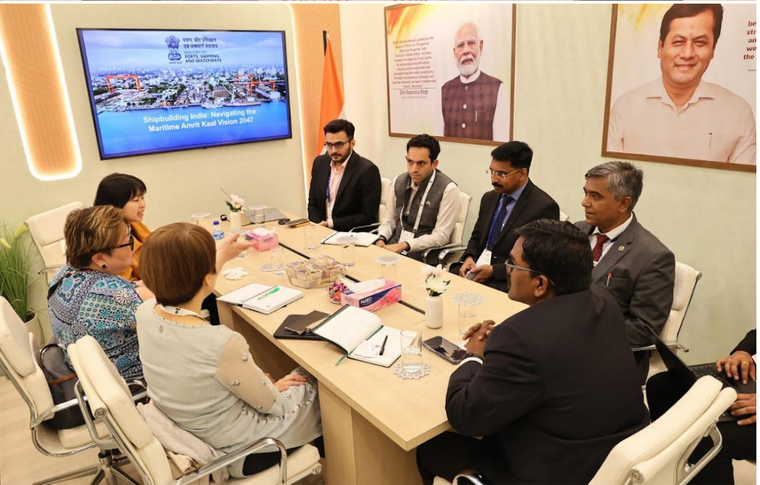
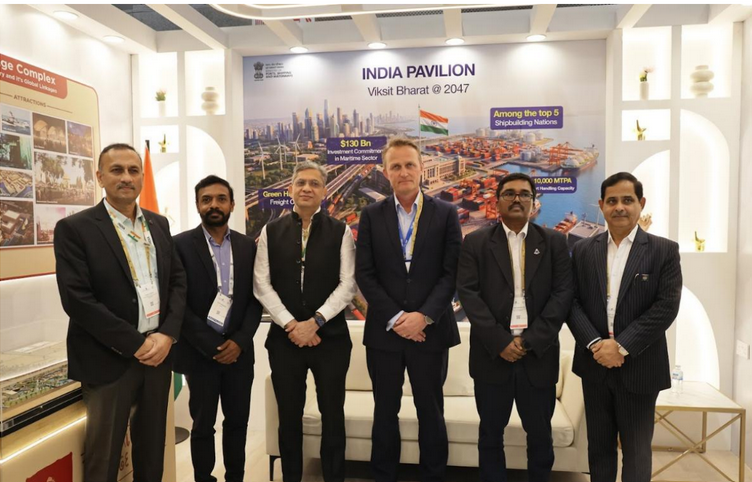
Led by the Directorate General of Shipping (DGS), the India Pavilion (160 sq.m.) positioned the nation as a future-ready maritime hub. The strategic focus centered on five pillars: maritime human capital, seafarer welfare, safety governance, digital transformation, and flag administration. High-level bilateral engagements, most notably with the International Maritime Organization (IMO) Secretary-General, addressed critical issues including the humanitarian crisis in the Strait of Hormuz, green shipping pathways (MEPC 84), and India's expanding role in global maritime diplomacy. The event concluded with a clear roadmap for India: shifting from dialogue to structured collaboration and leveraging digital governance as a scalable model for international partnership.
2. Global Maritime Landscape and Event Significance
2.1. The Evolving Global Context
The global maritime sector remains the backbone of the world economy, facilitating the movement of energy, food, and manufactured goods. However, the landscape has become increasingly complex due to:
- Geopolitical Uncertainty: Regional disruptions and shifting trade patterns have elevated the importance of supply chain resilience.
- Structural Transformation: The sector is undergoing a dual transition:
- a) Decarbonization: Shift toward cleaner fuels (methanol, ammonia), energy-efficient vessels, and green corridors.
- b) Digitalization: Rapid adoption of AI, smart shipping, digital twins, and integrated logistics platforms.
- Integrated Ecosystems: Competitiveness is now measured by the strength of a nation’s entire maritime ecosystem, including finance, insurance, technology, and workforce development.
2.2. Importance of Singapore Maritime Week
As a central hub for Asia-Pacific trade, Singapore provides a venue where commercial interests and policy priorities converge. For India, SMW 2026 served as a strategic instrument for:
- Brand Positioning: Showcasing progress in port modernization and the "Maritime Amrit Kaal Vision 2047."
- Investment Mobilization: Engaging global shipowners and technology providers.
- Benchmarking: Studying international models in maritime finance and autonomous systems.
3. Key Emerging Themes
3.1. Global Maritime Priorities
- Green Transition: Focus on green methanol, ammonia readiness, shore power, and the commercial viability of sustainability.
- Digital Differentiators: AI-driven predictive maintenance, vessel traffic optimization, and electronic trade documentation.
- Risk Management: Addressing cyber threats to critical infrastructure and insurance risks arising from regional instability.
- Human Capital: The necessity for continuous reskilling and advanced training to meet technology-driven operational models.
3.2. India-Specific Showcases
- Sustainability: Support for green shipping pathways and environmentally responsible operations.
- Modernization: Digital governance aimed at improving the "Ease of Doing Business" and paperless regulatory interfaces.
- Investment Opportunity: Promoting coastal shipping, ship repair, and port-led development.
4. The India Pavilion: Strategy and Presence
4.1. Vision and Objectives
The pavilion was designed to be transaction-oriented and engagement-driven rather than a static exhibition. The primary goal was to project India as a unified maritime ecosystem with scale and long-term strategic relevance.
4.2. Institutional Representation
Fourteen maritime organizations participated, covering a broad spectrum of the industry:
- Shipbuilding & Repair: Cochin Shipyard Limited, Hindustan Shipyard Limited (HSL).
- Port Authorities: Deendayal Port Authority, V.O. Chidambaranar Port Authority, Andhra Pradesh Maritime Board.
- Services & Finance: Shipping Corporation of India (SCI), IFSCA (Maritime finance and leasing), Tangar Ship Management.
- Technology & Research: NTCPWC (Coastal engineering innovation), Invest India.
4.3. Directorate General of Shipping (DGS) Five-Pillar Strategy
DGS focused on five strategic areas aligned with global priorities:
- Maritime Human Capital Development: Positioning India’s seafarer strength as a global workforce solution.
- Seafarer Welfare and Wellbeing: Showcasing programs like Sagar Mein Yog and Sagar Mein Samman.
- Safety and Accident Investigation: Strengthening regulatory frameworks and inspection regimes.
- Digitalization of Maritime Governance: Utilizing platforms like the DigiCom Centre and LRIT-based vessel tracking.
- Flag Administration Strengthening: Improving certification oversight to attract vessel registration under the Indian flag.
4.4. Engagement Tactics
- Digital Integration: The DGS area used digital screens for thematic storytelling and data-backed insights.
- Strategic Collaterals: /Branded "goodie pouches" were distributed, containing a pen drive pre-loaded with DGS policy reports, a lapel pin, and a keychain to ensure long-term brand recall.
5. High-Level Bilateral Engagements:
5.1 Bilateral with IMO Secretary-General (20 April 2026)
This meeting with Arsenio Dominguez focused on India's leadership within the International Maritime Organization (IMO) following its re-election to the IMO Council.
- Key Topics: Progress on India’s initiatives at the IMO, including the nomination of a Permanent Technical Domain Representative in London; the security situation in the Strait of Hormuz and its impact on seafarer safety; and India's commitment to the Ballast Water Management Convention and the IMO-India Green Voyage initiative.
- Outcome: India committed to active participation in forthcoming MEPC 84 and STCW discussions.
5.2. Bilateral with Norway Delegation (22 April 2026)
Led by the Deputy Minister for Ocean Policy and Fisheries, discussions focused on the strong existing maritime partnership between the two nations.
- Key Topics: Collaboration in advanced shipbuilding (specifically green and offshore vessels), technology transfer for shipyard clusters, and the development of green shipping corridors.
- Outcome: India was invited to Oslo in August 2026 for further engagement, and both sides agreed to cooperate on seafarer training for emerging technologies like autonomous ship operations.
5.3. Bilateral with Singapore Delegation (22 April 2026)
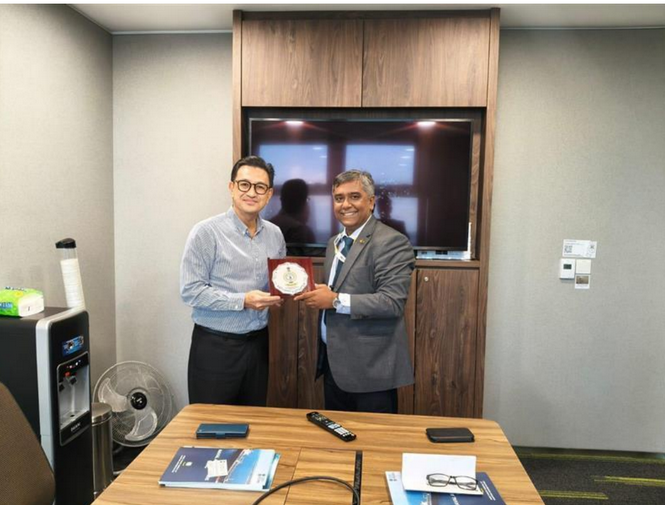
This meeting with the Permanent Secretary (Transport) centered on deepening the strategic partnership between India and Singapore.
- Key Topics: Implementation of the Singapore-India Green & Digital Shipping Corridor (GDSC), port automation drawing on Tuas Port’s experience, and cooperation in alternative fuels, specifically methanol.
- Outcome: Both sides agreed to fix the first Executive Committee (ExCom) meeting to advance the GDSC.
5.4. Meeting with Singapore Chamber of Maritime Arbitration (SCMA) (21 April 2026)
This was a courtesy meeting to explore the promotion of SCMA’s services to Indian stakeholders.
- Key Topics: Introduction of SCMA’s arbitration framework and its benefits as a neutral Asian venue for dispute resolution.
- Outcome: India advised SCMA to engage directly with the Indian National Shipowners’ Association (INSA) to build awareness.
5.5. Bilateral with BIMCO (21 April 2026)
Discussions with the SG and CEO of BIMCO focused primarily on the ship recycling industry.
- Key Topics: India’s compliance with the Hong Kong Convention (HKC), the Ship Recycling Credit Note (SRCN) scheme, and seeking BIMCO’s support for obtaining EU certification for Indian recycling yards at Alang.
- Outcome: BIMCO committed to showcasing a documentary film on India’s behalf to highlight its positive role in sustainable ship recycling.
5.6. Meeting with Wärtsilä (22 April 2026)
The focus was on leveraging Wärtsilä's technical competence to support India's shipbuilding ambitions.
- Key Topics: The transition to zero-emission shipping, localization of manufacturing for engines and propulsion systems in India, and demand aggregation for over 500 ships from the Indian public sector.
- Outcome: Wärtsilä Marine was invited to join the Joint Working Group on shipbuilding and component manufacturing.
5.7. Meeting with PSA International (24 April 2026)
A DGS delegation visited PSA’s Command and Control Centre to study global best practices.
- Key Topics: Port digitalization, real-time monitoring, and highly automated berth operations.
- Outcome: The visit provided insights for enhancing India’s maritime domain awareness and digital port governance models.
5.8. Meeting with MPA Singapore (20 April 2026)
This meeting focused on operational and regulatory coordination between the two maritime administrations.
- Key Topics: Cooperation on Port State Control (PSC) and Flag State Inspection (FSI), crisis management, and preventing marine pollution during bunkering.
- Outcome: India invited MPA to join the Indian Ocean Memorandum of Understanding (IOMoU) and to visit India for deeper institutional collaboration.
5.9. Meeting with Rapid Offshore Marine (23 April 2026)
Discussions with this Singapore-based firm focused on niche technical capabilities.
- Key Topics: HVAC, refrigeration, and integrated climate control solutions for the shipbuilding ecosystem.
- Outcome: The firm was invited to explore establishing engineering services or manufacturing operations in India.
5.10. Meeting with Enterprise Singapore (23 April 2026)
The final meeting focused on scaling digital trade and shipbuilding priorities.
- Key Topics: Deepening connectivity and shipbuilding collaboration, and scaling the TradeTrust electronic documentation framework successfully piloted between India and Singapore in 2023.
- Outcome: Both sides agreed to a technical-level virtual meeting to identify integration points between TradeTrust and India’s Maritime Single Window (Maitri)
6. Conclusion and Future Outlook
India’s participation at SMW 2026 marked a transition from dialogue to implementation-oriented partnerships. The successful facilitation of MoUs in green port development and maritime training underscores the effectiveness of a unified national presence. To maintain this momentum, India must continue to:
- Integrate innovation-led solutions and start-up participation into its global showcase.
- Position its digital governance models as "exportable" systems for other maritime administrations.
- Maintain a leadership role in global maritime diplomacy, particularly through the IMO Council and sustainability forums.
Singapore Maritime Week
| No. of Year | Title | Issue Date | Downloadd/View |
|---|